
研究领域:
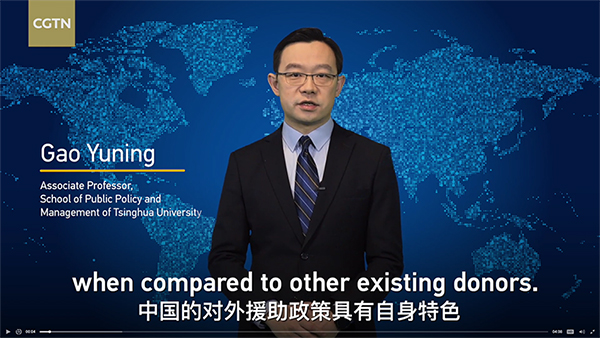
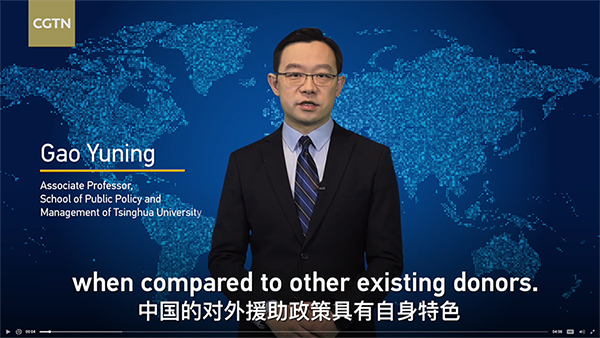
高宇宁 清华大学公共管理学院副教授、国情研究院副研究员 By Gao Yuning | CGTN | 10-Mar-2019 The speaker is associate professor of Tsinghua University and research fellow of Institute for Contemporary China Studies. China's foreign aid policy is unique when compared with those of other donors. 相比当下其他援助国,中国的对外援助政策具有自身特色。 It mainly focuses on infrastructure with few political or economic conditions. 主要关注基础设施建设,且不附加任何政治或经济条件。 This can be attributed to what I call the "recipient country effect": that China's foreign aid "style" is largely influenced by its own aid receiving experience. 这可以归因于我所说的“受援国效应”:中国的对外援助“风格在很大程度上受其自身受援经验的影响”。 The Chengyu expressway was one of the earliest road projects funded by the World Bank. 成渝高速公路是世界银行最早资助的公路项目之一。 They reached a deal that China would use the money independently without interference, on condition that repayment would be backed by China's fiscal revenue. 当时双方达成了一项协议,中国将独立使用这笔钱不受任何干涉,但条件是由中国财政收入来支持还款。 But it does not mean that China was too arrogant to accept any structural reforms. 但并不意味着,中国太过傲慢不愿接受任何结构性改革。 It did comply with the tolling system that ensured the sustainability of the road. 其实中国确实遵守了过路收费制度,确保公路运营的可持续性。 More importantly, that experience in infrastructure building has taught China a valuable lesson that connectivity is the artery for economic development, namely "Better roads lead to better life." 更重要的是,基础设施建设经验让中国明白一个道理,即互联互通是经济发展的命脉,所谓“要想富,先修路”。 China has spent decades as a major aid recipient country and with its rapid economic development, now has an increasing role as an international giver. 过去几十年里中国是主要的受援国,随着经济的快速发展,现在已经转变为国际上的援助国,发挥着日益重要的作用。 And just like the old days when it wanted autonomy over the use of money, it attaches few strings to its recipients and focuses on capacity building as its development philosophy. 正如过去,中国希望在资金使用上拥有自主权,现在它很少对受援国提出附加条件,并把受援国的能力建设作为其发展核心。 About two-fifths of China's foreign aid projects are on infrastructure building to improve links between regions, such as roads, railways, bridges, ports, airports, power grids, mobile phone signal towers and optical fiber networks. 中国大约五分之二的对外援助项目都是基建,旨在改善区域之间的交通联系,包括公路、铁路、桥梁、港口、机场、电网、移动通信信号塔和光纤网络。 Another two-fifths concern hospitals, schools and other humanitarian projects. 另外五分之二的对外援助项目涉及医院、学校和其他人道主义项目。 What China is doing is connecting cities and villages and narrowing the distance between them so that economic development can spread across a wider range of regions, benefiting more people and thus narrowing the gap between rich and poor. 中国的工作旨在连接城市和村庄,缩短通行距离,让经济发展能够覆盖更广泛的区域,惠及更多的人民从而缩小贫富差距。 The latest report from AidData, a U.S. research project, points out that night lighting is one of the intuitive indicators of household income in a region, and that the brighter the area on the satellite map, the better the economic development. 美国AidData研究实验室的最新报告指出,夜间照明是衡量一个地区家庭收入的直观指标之一,卫星地图上的区域越亮经济就发达。 The team picked up 3,485 Chinese construction projects in more than 130 countries and regions around the world from 2000 to 2014, combining the light and dark changes in areas where projects were located. 从2000年到2014年,该团队从世界范围挑选了130多个国家和地区的3485个中国援建项目,梳理了项目所在地区的夜间明暗变化。 The results showed that the lights were not only concentrated in the location of the Chinese aid projects, but also "illuminated" the nearby areas over time, showing a trend of outward radiation. 结果显示,明亮区域不仅集中在中国援助项目所在区域,而且随着时间的推移照亮了附近地区,展现出不断向外辐射的趋势。 As a result, the team came to an impressive conclusion: China's involvement in infrastructure projects not only drives the local economy, but also drives the overall development of the surrounding region. 最终,该团队得出了一个深刻的结论:中国参与基础设施项目建设,不仅推动了当地经济,也推动了周边地区的整体发展。 And that's why China is a unique giver. China's experience as an aid recipient shaped its own aid policy. 这就是为什么说中国是一个独特的援助国。中国作为受援国的经验塑造了自己的援助政策。 Just as the old Chinese saying goes, "awarding someone a fishing pole is always better than forwarding them fishes." 正如中国古语所言:“授人以鱼不如授人以渔”。